2026-10-10 ·
Hail Damage vs. Normal Wear: How to Tell the Difference
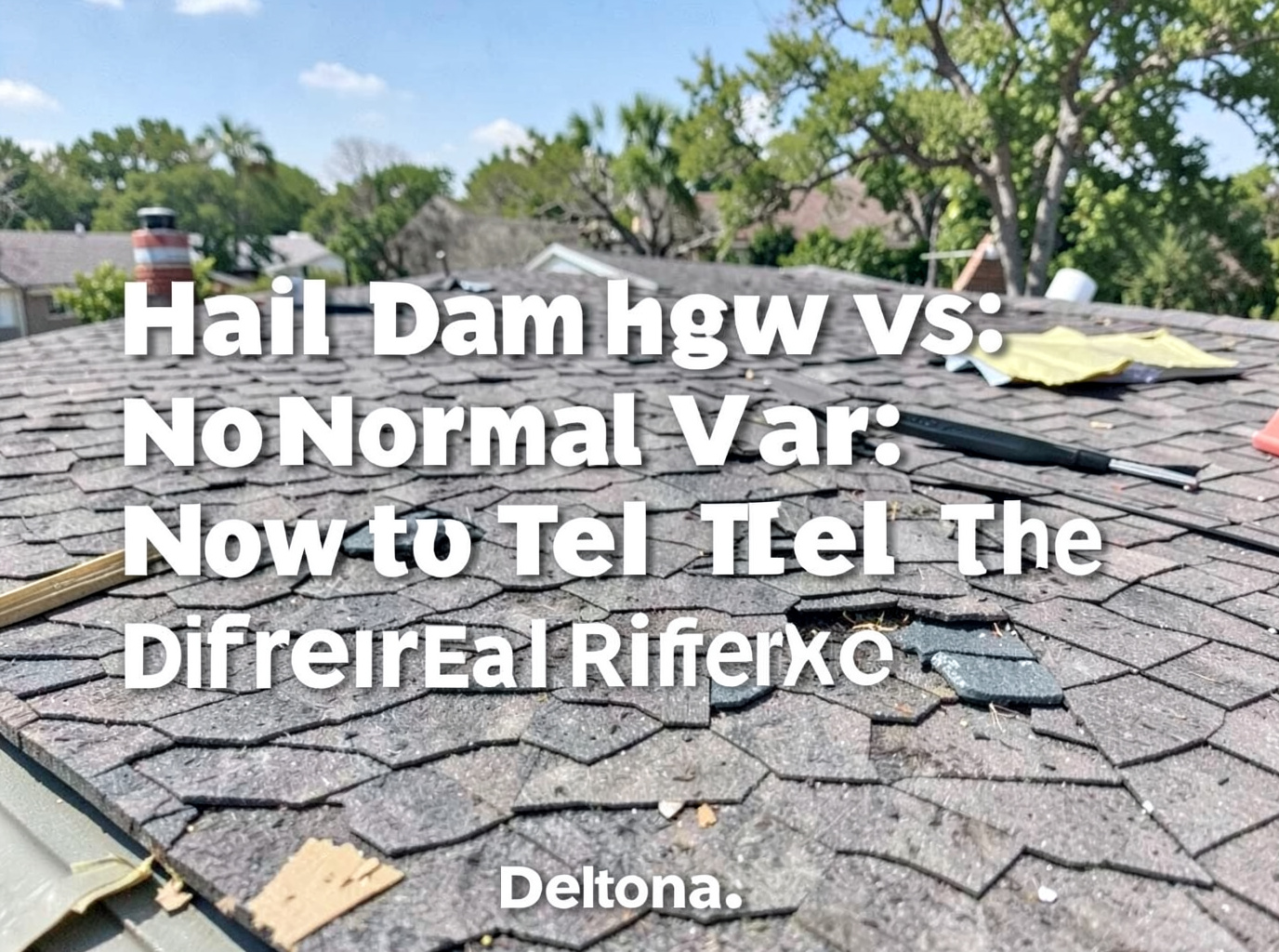
Hail damage appears as scattered circular dents with missing granules in concentrated spots, while normal wear shows uniform thinning and cracking after 10-15 years of exposure on Deltona roofs. This distinction matters for homes in Deltona Lakes and Enterprise because Volusia County thunderstorms can drop hail that mimics everyday aging until inspected closely.
Spotting Hail Damage Patterns on Shingles
Hail strikes create small, round craters where granules are knocked loose in irregular clusters rather than across entire slopes. In Deltona, asphalt shingle roofs common in neighborhoods near Lake Monroe often show these dents on south-facing sections after spring storms. Look for bruised areas that feel soft underfoot but lack the widespread cracking seen from daily UV exposure. Granule piles in gutters after a single event point to hail rather than gradual erosion. Wind-driven hail can also dent metal flashings around chimneys or vents, leaving visible dings that normal weathering rarely produces. Checking during daylight reveals the difference because hail marks reflect light differently than sun-faded surfaces.
Recognizing Normal Wear in Volusia County Conditions
Normal wear develops evenly across a roof as shingles lose flexibility from repeated hot summers and mild winters in the humid subtropical climate. In Enterprise and Deltona Lakes, roofs typically reach 12-15 years before curling edges and widespread granule shedding appear from constant humidity and sun. Cracks form along the same lines on every shingle rather than in random spots. Algae streaks darken north slopes first due to moisture retention near Lake Monroe, a pattern hail never creates. Homeowners notice sagging in older sections only after decades, not sudden changes after one storm. This steady breakdown differs sharply from the isolated hits hail leaves behind.
How Local Storms Influence Roof Condition
Volusia County sees frequent afternoon thunderstorms that can produce hail, yet most Deltona roofs experience more cumulative damage from daily humidity than isolated hail events. Homes in areas like Enterprise face wind that loosens granules over time, creating a uniform look unlike the patchy damage from hail. After events that also hit nearby Sanford or Daytona Beach, owners should compare roof sections protected by trees versus open exposures. The mild winters prevent freeze-thaw cycles that accelerate wear elsewhere, so Deltona roofs age mainly from heat and moisture. This climate reality means many apparent problems trace to age rather than one storm.
Steps to Confirm the Cause Before Repairs
Start by photographing the entire roof from ground level and attic inspections for water stains. Compare suspect areas to protected spots under overhangs to see if damage is random or uniform. Contact a local roofer familiar with Deltona Lakes conditions for a hands-on check that measures granule loss depth. Review After the Storm: 8 Steps Before You Call a Roofer for organized documentation. Check policy details in Does Homeowners Insurance Cover Roof Leaks? (Claims Guide) when hail is suspected. Avoid climbing in humid conditions when surfaces stay slick.
When to Schedule a Professional Assessment
Call for inspection when granule loss appears suddenly after a storm or when leaks develop near Deltona Community Center homes with 8-12 year old roofs. A pro can separate hail impacts from normal aging by checking underlayment condition and flashing integrity. In Enterprise, tree cover often shields sections, making random damage easier to spot against uniform wear. Linking to Hail Damage Roof Repair helps when patterns match storm activity rather than age. Owners in Deltona Lakes benefit from early evaluation before minor issues spread in the humid climate.